

.jpg)
SEO For Restaurants: 20 Essential Authority Platforms To List Your Locations

.png)
Stop losing guests to AI. Watch the exclusive session to audit your visibility and outrank every local competitor.
In a time where 8 out of 10 people choose their restaurant online, It is essential to optimize the referencing of your restaurant to attract customers with digital marketing.
And that starts with platforms and directories.
This top SEO tip is called "presence management", and is even more crucial when you leverage SEO for restaurant chains with multiple locations.
Moreover, as AI trends are reshaping hospitality forever, SEO rules have changed. Not only do your restaurants need to rank #1 on Google's results, they also need to appear in Google's AI Overview, or, on other AI tools such as ChatGPT.
To rank high and be picked as a definitive recommendation on ChatGPT or Google, your "data legitimacy" must be verified across dozens of high-authority directories like Yelp, Apple Business Connect, TripAdvisor, etc.
Listing platforms are one of the top presence management strategy to make your restaurants appear on ChatGPT and other AI.
Let's take a closer look.
Restaurant groups that leverage automated presence management on key platforms grow +74% faster in search visibility than those managing listings manually. (Source: 2025 Hospitality Groups Performance Report).
Why Platforms and Directories are Key for Restaurant Groups?
Platforms and directories are highly relevant when it comes to restaurant referencing, and here's why.
Search algorithms and LLMs (Large Language Models) look for triangulation to trust your website.
When your Name, Address, Phone (NAP), and Menus are identical across 60+ authority platforms, you build "Data Legitimacy."
This consensus tells AI and Google: "This business is real, active, and trustworthy," triggering it to recommend your locations over the competition.
Moreover, in a country where over 80% of customers search online before choosing a restaurant, your local SEO strategy matters more than ever.
Being visible on the right platforms will not only boost your ranking, but also drive direct traffic. This direct traffic = clients.
You can find different types of directories for different purposes and different target audiences.
- Booking platforms are regularly used by clients for direct acquisition, while other less-used secondary directories serve as content aggregators.
- Historical directories such as The Yellow Pages, add value to your restaurant in the eyes of Google or ChatGPT.
- Applications for restaurants like social media or even Foursquare will have a key role in your online weight.
However, managing 50 locations across 60 platforms manually means 3,000 potential points of failure. For restaurant groups, synching each location with up-to-date info all year long is only manageable through a command center.
That's why the MalouApp lists all of our clients locations on 60+ high-authorityl platforms in one single click.
Operators can also use agregating marketing tools, like apps tailor-made for restaurant chains or powerhouses like Store Locators, a plug-in on their website to maximize SEO juice across all locations. A Store Locator can also update each SEO content with the right SEO keywords automatically.
Here's a full article on how a Store Locator helps restaurant groups with AI visibility and SEO.
👉 Ready for your all your locations to rank #1 on Google? Here is the definitive "Authority List" of platforms every US restaurant CMO and CTO must sync to win the battle for Local SEO and AI discovery.
Interested in SEO & AI visibility? 👀 Make sure to watch our full webinar on How AI is Reshaping Hospitality with advanced examples and use cases.
The Definitive Authority List of Platforms and Directories for Restaurant Chains
1. Google Business Profile: the Local SEO King
For every restaurant search made by an internet user, Google suggests the most relevant results according to their criteria and location.
The first page of results includes 3 establishments located on a map, the coveted “Local 3-Pack” , followed by a series of links deemed relevant by Google.
Appearing in this top 3 can triple your visibility and conversions by driving direct actions: calls, clicks, directions.

To achieve this, you must first create your Google Business Profile listing regularly enrich it with quality content.
Share Google posts, add photos, menus, respond to customer reviews, etc.
This is what we call local SEO for restaurants and hospitality groups.The art of making you business appear n°1, ahead of your competition.
Appearing in the top results of Google equivalents: Bing Places and Yahoo Local, also strengthens the visibility of your establishment.
If you are a hospitality group, you can also strengthen your SEO by using local pages or better, a Store Locator.
Setup: You can import all your info from Google Business Profile to Bing in one click. As Bing still powers over 6% of US search volume, especially among Windows users and Edge browser, it can be strategic.
2. OpenAI & ChatGPT (The GEO Frontier)
While not a traditional "directory," OpenAI now ingests structured data from specialized aggregators to provide real-time recommendations.
- Why it’s key for chains: Being listed on high-authority platforms (like Malou’s network of 60+ partners) creates a "consensus of data" that ChatGPT uses to verify your locations are active and legitimate.
- Pro Tip: Malou is the first ecosystem to bridge the gap between restaurant data and OpenAI, ensuring your menus and locations are "readable" for LLMs.
LLMs also love "human generated content" (UGC), especially diners reviews. Make sure you collect as many reviews as possible using a reputation strategy to maximize your rankings on AIs.
3. Apple Business Connect (The iOS Powerhouse)
Website: businessconnect.apple.com
With over 50% of US smartphone users on iPhone, Apple Maps is the default for millions. It also feeds Siri and native Safari searches.
- Why it’s key for chains: Apple’s "Showcase" feature allows chains to highlight national promotions or seasonal LTOs directly in the Maps interface.
- Pro Tip: Claiming your "Place Cards" ensures that when a user asks Siri for "Best burgers near me," your branding and hours are 100% accurate.
4. Yelp: The Most Influential Review Platform in the US
Website:biz.yelp.com
Yelp has proven to be THE strategic space to reference restaurants and other locations.
Dominant in urban centers and with mobile users, Yelp powers discovery for millions and feeds its data into Amazon Alexa, Citymapper, and in-car navigation systems (BMW, Mercedes).
- Why it’s key for chains: Yelp reviews are heavily indexed by Google.
Pro SEO Tip: High Yelp ratings often correlate with higher organic search rankings.
- Pro Tip: Use AI semantic analysis to respond to Yelp reviews at scale, as Google’s algorithm rewards "active" and "responsive" business profiles. For that, make sure you use an AI tool trained for hospitality operators like Malou's semantic analysis.
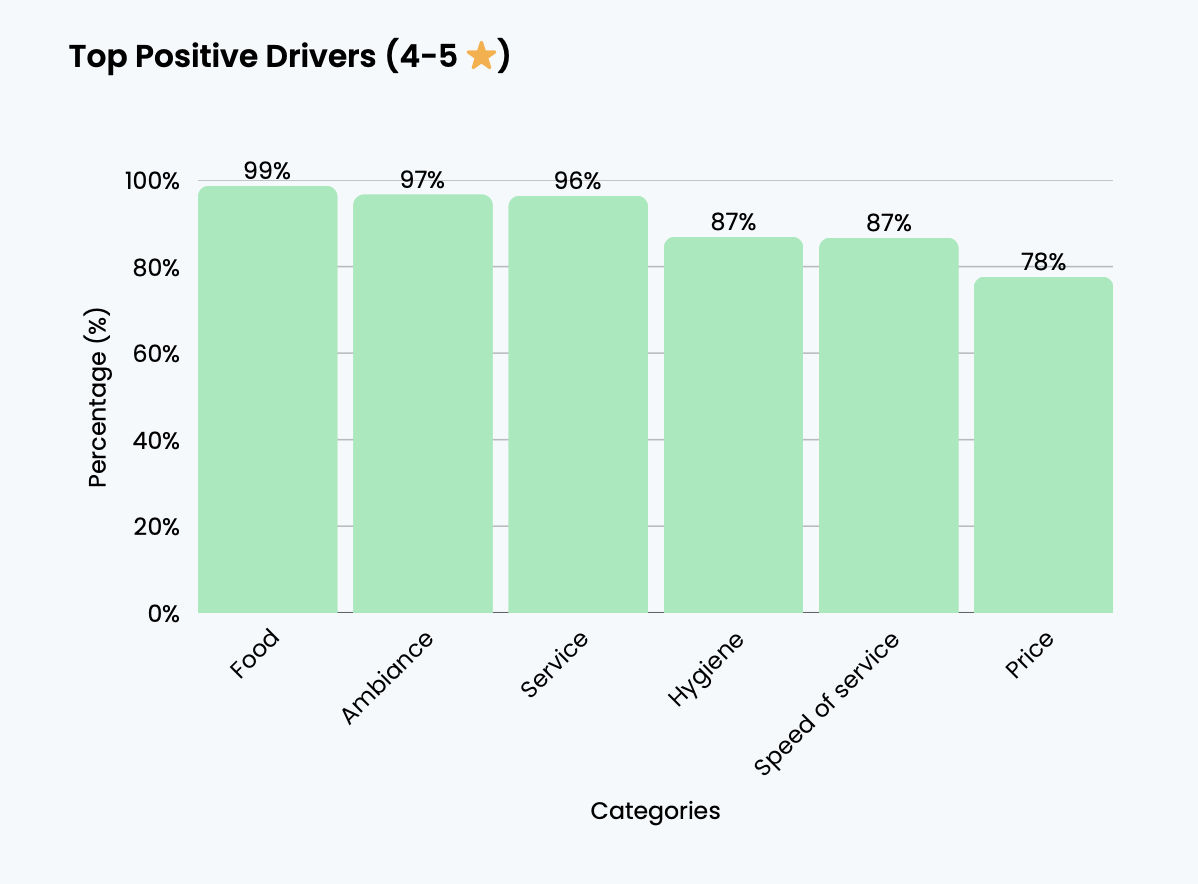
5. TripAdvisor: The Number One Tourist Magnet
Website: tripadvisor.com/Owners
With over 1 billion reviews, Tripadvisor is essential for capturing "out-of-town" revenue and international tourists. The platform allows users to refine their search with criteria such as neighborhood, type of food, price range, specific dietary restrictions, etc. Perfect to match user intent and attract clients through Local SEO and GEO.
Why it’s key for chains:TripAdvisor pages often outrank individual restaurant websites, especially for broad queries like "Best Italian in [City]."
The application uses Geolocation to suggest nearby establishments to users. The more complete an establishment's listing (images, description, attributes, significant number of reviews, comments with responses, etc.), The more the TripAdvisor algorithm pushes the establishment among the top search results. Ideal for attracting tourists, groups, and international diners.
Referencing and being visible on TripAdvisor are very useful because the Site's pages appear at the top of search results on search engines.
When a user based in New York searches for an Indian restaurant, the links to TripAdvisor and The Fork entitled “The best Indian restaurants in New York” Appear under the 3 results from Google Maps. Being at the top of these specific rankings helps you gain customers.
The most effective way is to appear even higher among the top 3 results suggested by Google. Although TripAdvisor offers undeniable visibility, Its booking system remains connected to The Fork, which comes with a commission.
Pro Tip: Optimize your "Primary Category" to match specific user intents (e.g., "Fine Dining" vs. "Family Friendly") to increase your conversion rate in tourist-heavy hubs.
6. Instagram (and Instagram Maps): “the place to be,” the essential food network
Website: business.instagram.com
With over 1.4 billion active users each month and 100 million posts per day, the success of Instagram is no longer in doubt. The social network is now essential to maximize the online visibility of your locations, especially when it comes to food trends and restaurants.
But that's not all.
Why it's key for restaurant groups: 1) Instagram is now a SEO tool (crawled by Google) AND 2) a Search Engine for restaurants.
To increase the visibility of your pages on Instagram and generate traffic to your locations, it must first be attractive. How? With regular, quality content that is specific to your brand. Some rules still need to be respected on Instagram to get the most out of it.
Make sure you use the Instagram Maps feature, a Google Maps for Instagram, allowing users to access an interactive map to discover restaurants, bars, cafes, hotels, etc. in the vicinity of their search location. From this map, users can directly access your Instagram page, as well as the content shared by your customers. This adds a whole new layer of SEO potential through location-tagged content.
Pro tip: Encourage customers to tag your restaurant’s location on Instagram and reshare UGC (user-generated content) weekly. Finally, ensure your "Action Buttons" (Reserve/Order) are synced through a tool to turn scrollers into diners instantly.
7. Facebook: From Social Network to Sponsorship Tool
48 million: that's the number of Facebook users. It is therefore an essential tool that, if well mastered, can attract many customers to a restaurant and then retain them. Having a business page contributes to search engine rankings, appears on Google, and allows local customers to check hours, menus, and reviews.
But today, Facebook has a real asset that sets it apart from other social networks: promotional campaigns. Facebook's sponsorship tool is incredibly powerful, allowing you to make your restaurant known to a very specific target audience. its Meta Business Suite lets you run hyper-targeted ads by geography, behavior, and interests.
Launching campaigns, even with small budgets, is enough to gain new customers.
Little tip: having a Facebook Page will allow you to add your location's name and address on Instagram's post.
8. OpenTable : The Reservation Giant
Website: restaurant.opentable.com
With millions of bookings per month, OpenTable is a direct line to customers ready to book now. Because it combines reservation engine + SEO, OpenTable also has a strong domain authority — restaurant pages often appear on Google's first page, especially for queries like “best X restaurants” or "best restaurant in X".
Opentable integrates with Google & social media for direct bookings and show reviews, photos, menus, and special offers. Offering time-based promos on it is ideal to boost bookings and visibility.
9. Foursquare: The "Invisible" B2B Backbone
Website: foursquare.com/interact
While consumer usage has dipped, Foursquare is the "location data engine" for Uber, Snapchat, Apple Maps and Twitter.
A listing here ensures your restaurant is visible across a large ecosystem. Users still exchange their recommendations for places, which is useful for tracking foot traffic and intent analytics.
Why it’s key for chains: If your info is wrong on Foursquare, your "Pin" on an Uber driver’s map or a Snapchat geotag will be wrong too.
10. The Yellow Pages (YP.com)
Website: yellowpages.com
The digital evolution of the physical book.
Never underestimate the power of historical directories like The Yellow Pages! They remains one of the most powerful "backlink" sources for local SEO.
- Why it’s key for chains: YP.com creates a high-authority citation that reinforces your NAP (Name, Address, Phone) consistency across the web.
11. The Michelin Guide: A Prestige Directory
Website : guide.michelin.com
Originated in France, The Michelin Guide has become a major authority in the US over the last decade, specifically in high-impact hubs like New York, California, Chicago, Florida, Washington D.C., and Texas.
The guide allows diners to find the best tables in the desired city. Contrary to popular belief, it lists establishments of all ranges, with special offers for those who book on the site. Users can also leave reviews. It's a good option to attract European tourists and benefit from its seniority.
For a restaurant chain (especially premium or "chef-driven" groups), a Michelin mention or even just being listed in their directory is a massive "trust signal" for both wealthy diners and search engine algorithms.
12. The Infatuation (The "Cool Factor" Directory)
Website: theinfatuation.com
Acquired by JPMorgan Chase, The Infatuation is increasingly popular with younger urban audiences. In 2026, this is the go-to guide for younger, affluent urban diners in cities like NYC, LA, Chicago, and Miami.
- Why it’s key for chains: Getting listed or mentioned here provides massive "backlink authority," signaling to search engines that your brand is culturally relevant.
13. Niche & Diet-Specific Directories (The Long-Tail Strategy)
Does your restaurant care about a specific clientele or culture? Do you care to younger generations, vegetarian, vegan, halal, or kosher customers? These customers search for their restaurants on specific directories that are in line with their “specific diet.”
Listing your restaurant on specialized directories doesn’t just support ethical and inclusive marketing — it’s also a smart SEO move. You’ll increase your local footprint, reach underserved audiences, and strengthen your restaurant’s online authority
Pro tip: To win at National SEO, you must dominate the "Long-Tail" (niche & specific searches).
- HappyCow is the world’s leading platform for vegan, vegetarian, and veg-friendly restaurants. Highly trusted and widely used, it is well-ranked on Google, especially for long-tail searches (e.g. "vegan sushi NYC").
- Zabihah is the #1 halal restaurant directory in the US, a must-have listing highly trusted within the Muslim community.
- YeahThatsKosher is more niche, but frequently consulted by kosher consumers in NYC, Miami, and Los Angeles. It can secure strong search rankings for queries like “kosher restaurant + [city]".
- Find Me Gluten Free is the Bible For the millions of Americans with Celiac or gluten sensitivities.
Why it’s key for chains: Gluten-free or Halal are "high-trust" niche. Being listed here with verified attributes (which Malou pushes) captures an extremely loyal, sometimes underserved audience.
14. Delivery Aggregators (Uber Eats, DoorDash, Grubhub)
Website: merchants.ubereats.com
Do you offer delivery? Delivery and click-and-collect are powerful search directories. They increase brand visibility and generates more revenue (all depending on how much they are taking as a commisision).
Why it’s key for chains: Many diners use these apps as their primary "discovery" tool. High rankings within these apps drive "halo" effects for your dine-in business.
15. Waze (The High-Intent Driver Engine)
Website: waze.com/business
Waze is the #1 community-driven navigation app. It’s where people make "on-the-road" decisions.
- Why it’s key for chains: Listing your locations here ensures that when drivers search for "coffee" or "lunch" along their route, your logo pops up as a branded pin.
- The Malou Tip: Accurate pins prevent "navigation churn"—nothing kills a chain's reputation faster than a driver being guided to a closed location.
16. Nextdoor (The Hyper-Local Neighborhood Hub)
Website: business.nextdoor.com
Nextdoor is where "Neighbors" ask for recommendations. It is the gold standard for word-of-mouth SEO.
- Why it’s key for chains: Getting "Faved" by locals on Nextdoor tells Google that your location isn't just a corporate entity, but a local staple.
- The Malou Tip: We help chains monitor and respond to neighborhood-specific feedback, which is 10x more influential than a random 1-star review.
17. Zomato (The Mobile Discovery Specialist)
Website: zomato.com
While it originated abroad, its US data presence remains a key citation source for search engine crawlers.
- Why it’s key for chains: Zomato’s deep menu-tagging system helps Google understand your specific dishes (e.g., "Best Truffle Fries") through structured data.
18. MapQuest (The Legacy Authority)
Website: mapquest.com
Don't laugh—MapQuest still has millions of monthly users and, more importantly, massive domain authority.
- Why it’s key for chains: Because it’s an "old" platform, Google views it as a "Historical Trust Signal." A consistent listing here acts as a "verified" stamp for your chain.
19. CitySearch & Local.com
Website: citysearch.com | local.com
These are "Aggregator" sites. They collect data and feed it to smaller local blogs and news sites.
- Why it’s key for chains: Listing here creates a "spider-web effect." One sync from the MalouApp to these platforms can result in your restaurant appearing on dozens of smaller local portals you didn’t even know existed.
20. Chamber of Commerce & BBB
Website: chamberofcommerce.com | bbb.org
The ultimate "Legitimacy" signals for the US market.
- Why it’s key for chains: These are high-trust B2B directories. Search engines use these to verify that your business is a legal, tax-paying entity, which boosts your "Prominence" score in the algorithm.
Bonus: Do you want to reach tourists?
To make yourself known to a foreign clientele, you must first ensure the presence of your restaurant where tourists do their research. Europeans use TheFork, Chinese use Djanping, or Korean on Mango Plate.
Final Thoughts: Scale with Agility
By monitoring your data and maintaining 100% consistency across these 60+ platforms, your restaurant group avoids the "data decay" that leads to lost customers and 1-star reviews.
At Malou, we’ve built the only platform tailor-made for restaurant chains ready to tackle the AI era.
Our top tip: call us at +1 (929) 483 0848 to reach one of our expert on online marketing and growth for restaurant groups.
.jpg)
.jpg)

We put The double bites to satisfy you
Increase your visibility on Google and social networks with Malou.
