

Booking a table inside ChatGPT: what the Yelp x OpenAI deal means for restaurant groups

.png)
Analyze your online performance and competitors, and get a comprehensive audit with personalized advice!
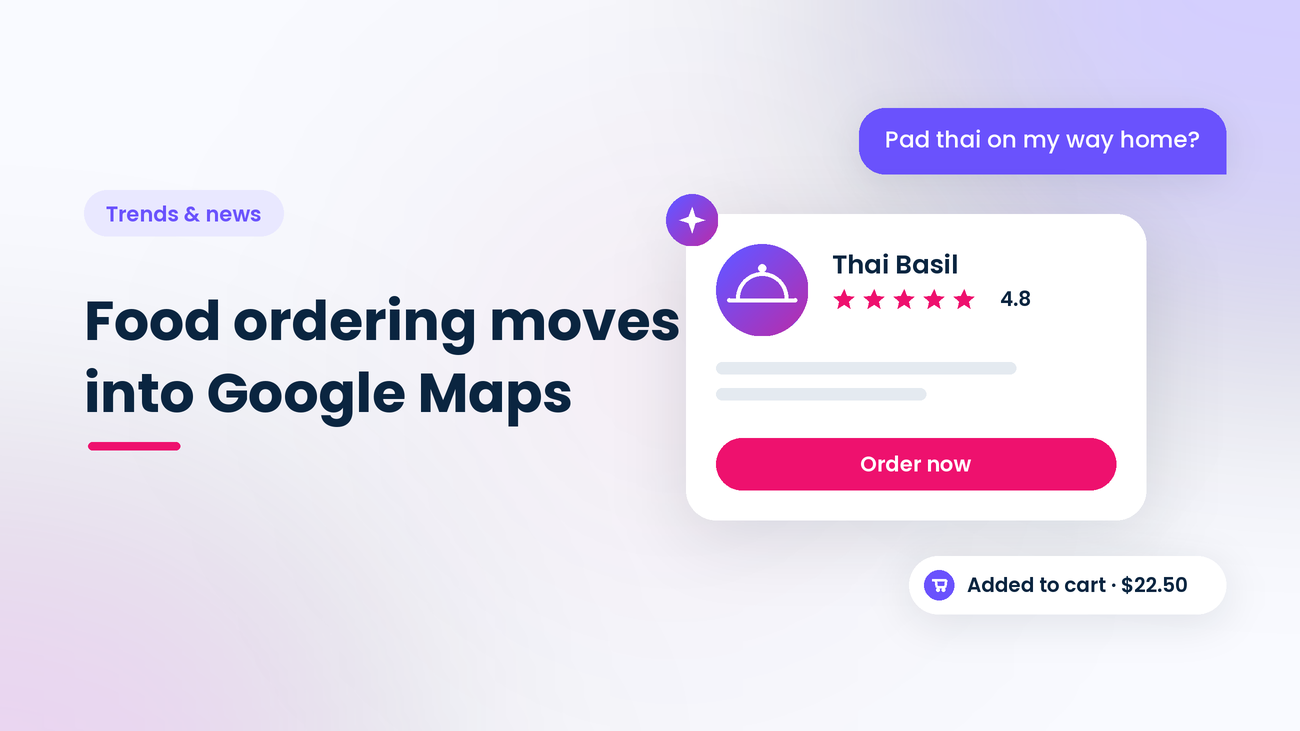
Update, August 13, 2026: Google has answered. Ask Maps can now order food directly inside Google Maps, through Square, Toast and soon Uber Eats — read our analysis.
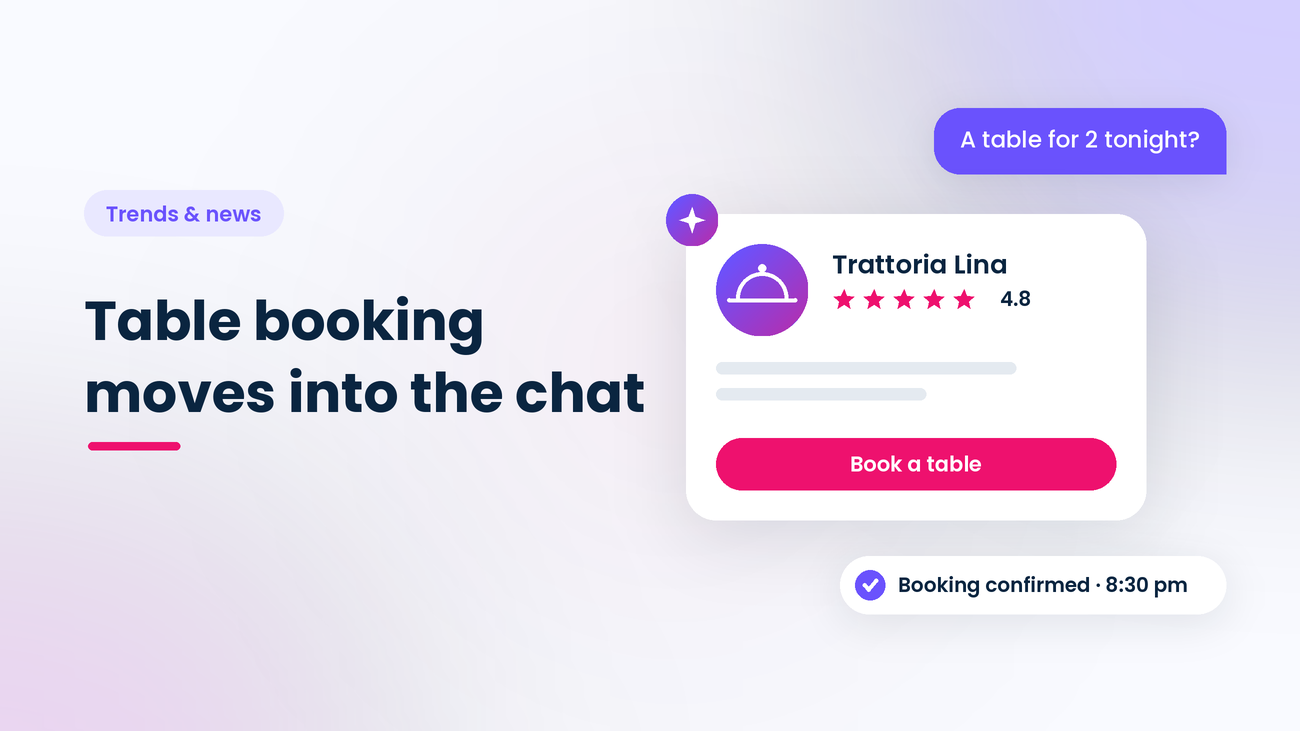
On August 10, 2026, Yelp announced something that will change how restaurant marketers think about AI: diners in the US and Canada can now book a table or join a waitlist directly inside ChatGPT, without ever leaving the conversation.
Three weeks earlier, Axios had revealed the deal that makes it possible: Yelp is licensing its reviews, ratings, photos and business details to OpenAI. ChatGPT now draws on that data to answer local queries, with Yelp branding and links displayed in the response.
Put the two together and a loop closes: a diner can discover a restaurant, compare reviews and secure a table in a single conversation. No Google search, no website, no app. For restaurant groups, that's not an incremental feature — it's a preview of how local discovery is going to work.
What actually happened
The Yelp x OpenAI partnership rolled out in two stages.
First, the content. Since late July, ChatGPT can draw on Yelp's corpus — 330 million cumulative reviews and more than 8 million business listings — to answer local questions: reviews, ratings, photos and business information. The deal is non-exclusive: Yelp remains free to license the same data to other AI platforms, just as it already feeds Apple Maps, Alexa, Bing, DuckDuckGo and Yahoo.
Then, the action. Since August 10, ChatGPT users can book through Yelp Reservations or join a waitlist at thousands of restaurants across the US and Canada, directly in the chat — for restaurants running Yelp Guest Manager, Yelp's front-of-house platform. And the launch doesn't stop at Yelp: OpenTable and Resy were integrated at the same time. This isn't one reservation network plugging into ChatGPT — it's the reservation infrastructure of the North American market.
A third piece is coming: the "Request a Quote" feature, which will let users contact local service providers without leaving ChatGPT.
Why this is a turning point
The detail that matters is in the contract: the deal is non-exclusive. Yelp has been running this play for years — Apple Maps, Alexa, Bing, Yahoo — and OpenAI is just the newest name on the list. Tripadvisor follows the same logic: its ChatGPT app already puts its reviews, ratings and photos inside the conversation, and its Perplexity partnership feeds another assistant. So this isn't one partnership — it's the first of a series, where each review platform licenses its corpus to its own set of AI partners, on its own timeline and its own terms.
The numbers show how fast the shift is happening. According to BrightLocal's 2026 Local Consumer Review Survey, 45% of consumers used an AI tool to find a local business in the past year — up from just 6% the year before. AI is now the third most-used local discovery channel, behind Google and Facebook.
Trust is the other half of the story. Yelp's own Morning Consult research found that while most Americans have tried AI search, only a small minority fully trust it — and a large majority want AI platforms to show their sources. That's exactly why OpenAI is signing deals with trusted review platforms: borrowed credibility makes AI answers usable. Your reviews are the raw material.
And there's a structural difference from classic search: a Google results page shows ten links and lets the diner sort it out. An AI gives one answer. Your restaurant is in it, with accurate details — or it doesn't exist for that diner. There is no page two.
What it changes for a multi-location group
For a group running 3, 10 or 50 locations, four direct consequences.
Your data works for you — or against you — whether you manage it or not. AI answers are built from the listings, reviews and content that already exist about your locations. A wrong opening time, an outdated address or a stale menu on a single listing, and that flawed version can end up in the answer. At group scale, data consistency across every location becomes a revenue issue, not just an SEO one.
Your platform coverage decides which answers you exist in. Each assistant draws on the sources it has licensed: a restaurant on Google and Yelp lives in one set of answers; the same restaurant, also present on Tripadvisor, OpenTable and delivery platforms, lives in another. Same restaurant, different answer depending on the AI being asked. Long treated as a secondary checkbox, up-to-date coverage of each review platform is becoming a ticket into the answers.
Reviews are now the raw material of AI recommendations. The volume, recency and content of your reviews directly shape what AI says about each address — and not just the star rating: photos and menus also feed what the model understands about you. A location with 40 recent reviews and thoughtful responses gives the model far more to work with than one with 4 reviews from 2023. Location-by-location review management has never mattered more.
A new booking channel is emerging — and it's hard to measure. When a diner clicks from ChatGPT to your website, the visit lands in Google Analytics with chatgpt.com as the source. But a reservation completed entirely inside the chat may never create a session on your site at all. Without proper tracking, this channel will read as zero in your dashboards — right when it starts producing covers.
One more thing worth knowing: early spot checks suggest Yelp data isn't yet visibly cited in ChatGPT's local answers. The integration is signed, the surface is still rolling out. That's a preparation window, not a reason to wait.
Are you AI-ready? The 9-point checklist
Score one point for each statement that's true for your group, across all your locations:
- Hours, addresses and phone numbers match on Google Business Profile, Yelp, TripAdvisor and your website, for every location.
- Every location is present, claimed and up to date on multiple review and booking platforms — not just Google.
- Every location has its own page on your website, with the menu as readable text — not just a PDF.
- Your website uses schema.org markup (Restaurant, Menu, FAQ).
- Every location has received reviews in the past 30 days.
- More than 80% of reviews get a response, at every location.
- You've already tested what ChatGPT says about your restaurants, using real guest questions.
- The chatgpt.com source is tracked in your analytics.
- Your "how did you hear about us" fields include an AI / ChatGPT option.
8-9 points: your group is ready for AI discovery. Keep the pace and rerun the test every quarter.
5-7 points: the foundations are there, but every missing point is an open door for a competitor in the AI answer. Work through them in list order.
0-4 points: your data is currently telling a story you don't control. Start with points 1 and 5 — listing consistency and review freshness — then run a visibility audit to get an objective picture.
The bottom line
Yelp and OpenAI just showed what restaurant discovery looks like when finding and booking happen inside one conversation. The platforms will vary by market, but the rule won't: groups whose data is clean, consistent and rich — across every platform that matters — will be in the answer. The others will watch their competitors get the table.
The good news: that data is already yours to control. Listings, reviews, content — every lever is one you can pull today.
At Malou, we help restaurant groups manage their local visibility — listings, reviews, content — across every location, and get ahead on emerging AI channels. Test your group's visibility with our audit tool.
We put The double bites to satisfy you
Increase your visibility on Google and social networks with Malou.
