

Ranking n°1 : Google’s 2026 Roadmap for Hospitality Discoverability

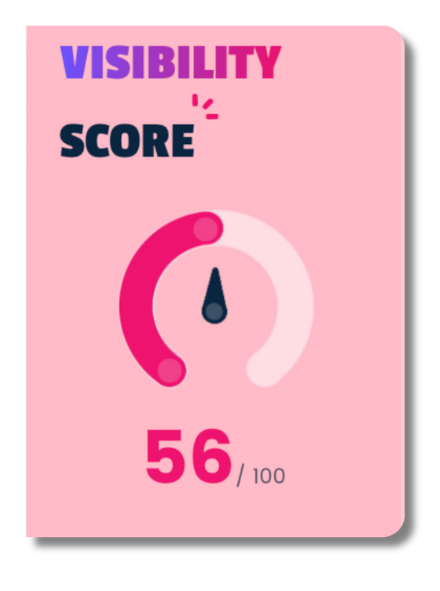
Find out where you stand, spot what’s holding you back, and get a custom action plan to outrank your competition.
AI has completely reshaped discoverability as we know it. Search is no longer just a list of blue links; it has become conversational, multimodal, and agentic. However, one thing hasn’t changed: 92% of local search is still going through Google. AI Overviews & AI Mode are now ruling the game.
To help hospitality groups navigate this shift, Malou partnered with Google for an exclusive webinar, How Can Groups Make the Most of Google in 2026.
This article breaks down the strategic roadmap shared by Bonnie White (Google), Louiza Hacene & Amayas Sadeg (Malou) to ensure your restaurant group doesn't just survive the AI era, but dominates it.
Key Takeaways: How Restaurants Groups Can Rank on Google in 2026 ?
Enhanced Executive Summary: The 2026 Visibility Framework
The "AI-Ready" Checklist: 5 Tips for 2026 Success
The Future of Local Search – The New AI Reality
Google is not just adding features; it is moving towards a search experience fundamentally powered by AI. As Bonnie White from Google Search Partnerships puts it: "Search is AI-powered. It's multimodal and it's agentic", as mentioned Bonnie White (Google).
For restaurant groups, this evolution is defined by three major shifts:
1. Multimodal Search: Searching Beyond Text
Users are no longer restricted to typing. They are exploring and deciding through:
- Image: Using Google Lens to circle items on a plate to learn more.
- Voice: Asking complex questions while walking down the street, such as, "Hey Google, take a look at this menu, are there any vegan options?".
- Video: Recording a query in real-time for Google to solve.
2. AI Overviews & AI Mode: AI layered on Google Results
Google now delivers results through two distinct AI-driven interfaces:
- AI Overviews: "Think of it as the concierge in the lobby". It sits at the top of results, combining live web data to provide fast, clear answers for speed and clarity.
- AI Mode (Gemini): "A powerful conversational ally". Perfect for users who want to "dig deeper" and have an immersive, conversational experience.
3. Agentic AI: From Search to Conversion
The most significant shift for your bottom line is what we now call "Agentic AI". This new phenomenon really is the future of search.
Agentic AI means AI "as a valet": less friction that traditional searching, moving from search to conversion as you will be able to buy or order online.
It moves beyond simply returning links to executing tasks. In the US, Agentic Booking is already live. It bypasses the research phase, comparing availability and competitors to drop the customer directly into your booking options
"Restaurant search is not disappearing. In fact, it's expanding because we're seeing over 43 million restaurant searches daily on Google".
4.New Google Features: AI-Driven Growth
Finally, other new exciting Google features need to be considered when it comes to ranking your restaurants online.
Of course, none of these features function if the AI doesn't have the fuel to power them.
That fuel is the story that you're telling on your Google Business profile.
This means:
- Fresh content, updates
- Rich photos, live feed…
All this is going to tell the AI that you're open for business.
These are not just an addition of features, this show Google is moving towards a search experience increasingly powered by AI. AI is the new direction for discovery.
The real question is: are restaurant groups ready for that shift ?
According to a recent Malou study, they may not be there quite yet...
Why Most Groups Are Not AI-Ready – The Visibility Gap
Despite the massive volume of searches and the evolution of search features, most restaurant groups are failing to capture this demand. At Malou, after analyzing hundreds of multi-location groups, we’ve identified a critical phenomenon: The Visibility Gap.
This is the disconnect between what AI search engines expect in terms of signals and how groups actually structure their digital presence.
1. The Discovery Trap: Brand is Not Your Growth Engine
The first mistake many groups make is relying on notoriety. While brand awareness is important, it is not your primary driver for new business.
- The Non-Branded Revolution: 79% of restaurant searches are non-branded. Guests aren't looking for you by name; they are searching for intent-based terms like "best donuts in Miami" or "ramen near me".
- The 4 out of 5 Rule: In hospitality, 4 out of 5 searches are discovery-based. Most of your future guests don’t know you yet, so your growth depends entirely on your ability to be discovered when they search for a category, not a brand.
2. The Multi-Location Trap: Scale Amplifies Inconsistency
As groups grow, maintaining a unified digital ecosystem becomes exponentially harder. Scale without governance leads to fragmentation—the number one killer of AI rankings.
- The Trust Gap: We observe an average 1.3-point star rating gap between the best and worst-performing locations within the same brand.
- Confusing Signals: A location sitting at a 3.4-star rating while another is at 4.7 sends mixed signals to both guests and AI.
- Fragmented Systems: Often, local managers handle listings independently with no centralized oversight, shared KPIs, or unified content strategy.
3. The Structural Barrier: Missing the AI "Fuel"
AI doesn’t just "index" restaurants; it selects reliable ecosystems.
Most groups underestimate how much the structure of their content matters to rank on Google and be detected by AI.
- The PDF Menu Problem: 60% of restaurants still use PDF menus. AI cannot "read" or "reason" with a flat image of a menu; if you don't have structured data, you miss out on queries like "vegetarian ramen near me".
- The Completion Crisis: Only 30% of restaurants have a 100% complete Google Business Profile (GBP). Furthermore, 40% of restaurants don't even have a menu link on their GBP.
- The Technical Gap: Only 20% of store locators have proper Schema markup. Without this, Google struggles to crawl and index your local pages, making them invisible to AI-driven search.
"AI doesn't rank locations, it selects reliable ecosystems."
If your data is fragmented, AI gets "confused" and won't recommend you as a reliable choice.
Now that we understand the pitfalls of the Visibility Gap, let's shift from why groups fail to how they can succeed by turning these structural weaknesses into a scalable roadmap for growth.
The AI-Ready Playbook – How to Rank Your Restaurant Group on Google in 2026
To rank in 2026, you must stop treating visibility as a collection of marketing tasks and start treating it as an operational discovery system.
Here is the concrete roadmap shared by the experts to bridge the gap.
1. Be the Primary Information Source
Tell the AI directly that you are reliable and ready for guests.
Bonnie White (Google) emphasizes: "The key fact is that Google Business Profile data is the true source. Google's AI knows how to pool all of your data through to these experiences automatically".
- Own the Narrative: Ensure 100% attribute completion (WiFi, outdoor seating, etc.) to signal reliability to Google’s LLMs.
- The Verified Answer: Profiles with complete data see 7x more clicks because they provide the certainty both AI and customers crave.
2. Kill the PDF: Use Structured Menus
As established, PDFs are AI-blockers. Since 84% of users look up a menu online before deciding on a restaurant, your menu data must be machine-readable.
- Structure Your Data: Add menu items with titles, descriptions, and prices directly into your profile.
- Crawlability: This allows Google to identify specific ingredients (e.g., "vegan options") to answer complex conversational queries.
3. Leverage the "Return" of Google Posts
Google Posts are no longer just for human eyes; they are a critical signal for AI freshness. They will play a huge role in your restaurants appearing in AI Overview!
- Frequency: Google recommends posting at least once per week.
- Impact: Google Posts are a great format to feed the AI that recommends you.
- Strategy: Use intent-rich keywords in your descriptions to help your business appear in AI Overviews.
4. Activate WhatsApp for Direct Conversion
With 60% of customers preferring WhatsApp to interact with a store, this feature is essential for building "instant credibility and trust".
- Instant Trust: Direct communication removes friction in the guest journey.
- Centralization: You can now manage these messages directly through the Malou platform to maintain governance across all locations.
5. Scale Semantic Review Governance
AI (Gemini) doesn't just look at stars; it performs semantic analysis on your reviews to identify unique value—like "creative cocktails" or "secret entrance".
- The Rule of 100%: Respond to every review—especially negative ones.
- Signal Reliability: Consistent response activity signals to the AI that your business is active, reliable, and takes feedback seriously.
Conclusion – Reliable Ecosystems Win at Scale
In the AI era, ranking is no longer about winning a single keyword; it is about building a verified, structured ecosystem, from SEO to GEO.
Case Study: How Krispy Kreme Structured Discovery
When Krispy Kreme launched in France, they faced the challenge of being visible across every new location while maintaining a scalable digital strategy. By implementing a centralized system through Malou, they achieved:
- 100% GBP Completion for every location.
- Unified Keyword & Intent Framework to capture "Goûter" and breakfast searches.
- Results (after 5 months): A +50% increase in Google Maps impressions and double (x2) the traffic coming from AI Search.
Final AI-Ready Checklist: Your 2026 Roadmap
To dominate the search results, ensure your group has ticked every box in the 2026 AI-Ready Master Checklist:
- 100% Completion. Profiles with complete data see 7x more clicks. Fill every attribute to give AI the certainty it needs.
- Visual Discoverability: Multimodal Proof. Quality photos make users 90% more likely to visit. Use AI tools like Nano Banana to edit and suit your brand vibe.
- Freshness Signals: 1 Google Post Per Week. Weekly updates tell the AI you are "open for business" and feed the Gemini algorithm.
- Structural Data: Kill the PDF Menu. 60% of groups fail here. Use machine-readable HTML menus so Google can crawl specific dish names. Better, use a Store Locator.
- Agentic Conversion: Frictionless Booking. Connect your reservation providers directly to GBP to turn search discovery into instant conversion.
- Direct Messaging: WhatsApp Integration. Build instant credibility and trust—60% of guests prefer this chat platform.
- Review Governance: Scale Sentiment. Respond to every review—including the negative ones. AI summarizes this feedback to identify your unique USPs.
- Ecosystem Sync: The 50+ Sync. Ensure 100% consistency across Google and 50+ third-party platforms. Fragmented data kills AI trust.
Ready to see where your group stands in the new era of search? The "Visibility Gap" can sabotage your growth, but structure can bridge it. Don't let your brand stay invisible to 79% of your potential guests.
👉 Scan your online performance for free with our Malou Audit. You can also book a demo or call one of our expert at +1 (929) 483 0848


We put The double bites to satisfy you
Increase your visibility on Google and social networks with Malou.
